


Day 3 - SEWA and Aajeevika Bureau (Ahmedabad)
On our third day in India, we finally got to see the organisations we presented on when we were in Singapore.
First, we visited the Self-Employed Women’s Association (SEWA). We were greeted by melodious singing and welcome ‘stamps’ on our foreheads, and soon we were immersed in (a small part of) the peaceful and serene ten acres of land managed by the women’s cooperative. It was really enlightening to hear the stories of the women. Poonam Shroft, Jignasa Pandya, Niruben, Mayaben and Meetaben shared their experiences. We learn about their transformation, how they voyaged through struggles, doubts and opposition, to become the strong and women that we know of in present. From the way they speak, their confidence and conviction shine through, and we can safely say that everyone was immensely inspired by their resilience and drive. When they shared about how SEWA functions, we were so impressed by how organised they are, and how the women overcame so many obstacles s to be self-sufficient and empowered. This has allowed them to improve their lives, their families lives as well as the situations of their sisters in SEWA.


Next, we engaged with Aajeevika Bureau’s team in their Paldi office in Ahmedabad, which is a “Destination” centre (where migrants move to work). Our group went to four different places: 1. Community kitchen at JS Dyeing factory + slums 2. Crèche at Janiyapir ka tekra, Vatva + Gujarat Industrial Development Corporation area 3. Kalupur market (migrants engaged in headloading) + health clinic + Akbarnagar Naka (congregation point for workers) 4. Crèche at Makarba + Sewage basti (tribal migrants engaged in construction work and living in open spaces)
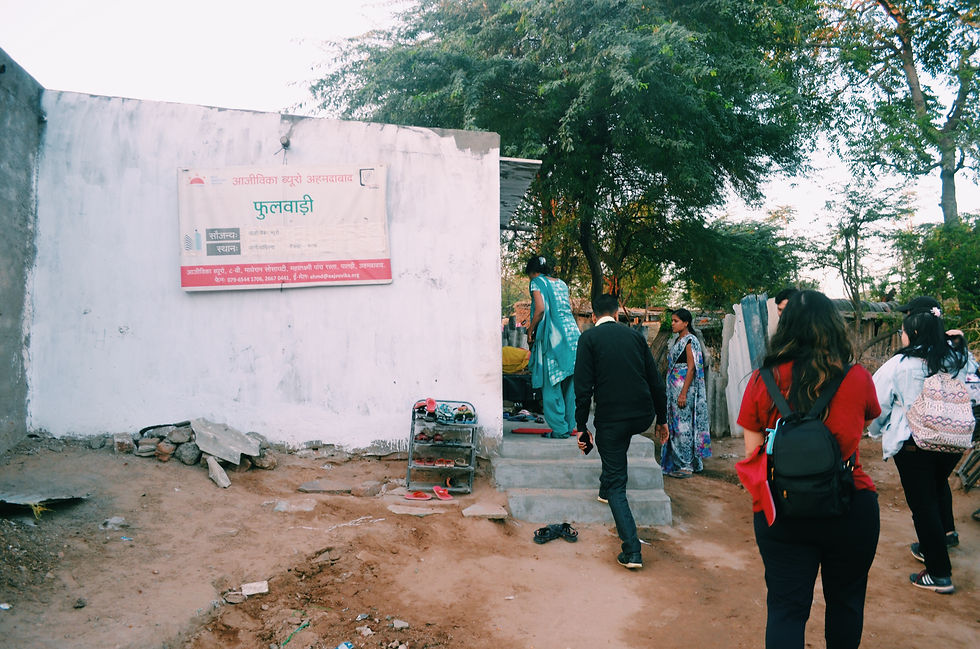
As different groups went to different locations, everyone had differing perspectives on the lives of migrants. Yet, even with a wide variety of opinions, one common thread was the acknowledgement that so much more can be done for migrants. As a group of us visited a slum cynically named the “Labour Colony”, we trudged on uneven terrains that the slum was built on. Haphazard units assembled by metal scraps and dusty dim yellow lighting characterized the slum, with an enormous textile factory looming in the distance. The textile factory, akin to a gigantic smoke churning machine, not only reminded us of the many health implications that migrants face but also their dire living conditions as a whole.
Being able to see first-hand the living and working conditions of migrants in India, we witnessed how Aajeevika Bureau has impacted their lives. Many of us had many thoughts and emotions hitting us from the short few hours we spent in the field. Shock, surprise and awe were common feelings felt by most of us, but we can agree that we were fascinated by the work that the Bureau is doing, and the passion of the staff to serve this large yet silent community in India.
The day ended with a cosy and sumptuous dinner at Tandooworkz, a restaurant owned by a friend of a staff in Aajeevika Bureau. (Fun fact: the owner had studied and lived in Singapore for a few years before coming back to start this restaurant!) It was nice to have had dinner with some of the staff from Aajeevika Bureau, and amidst heart conversations, we enjoyed a good spread of food. We look forward to travelling to Udaipur tomorrow, and creating more memories to remember.
Comments